
Field guide
Finding the Landowner Before Seed Collection
Resources and a simple workflow for identifying who owns a promising seed, fruit, nut, or berry collection site before asking permission.
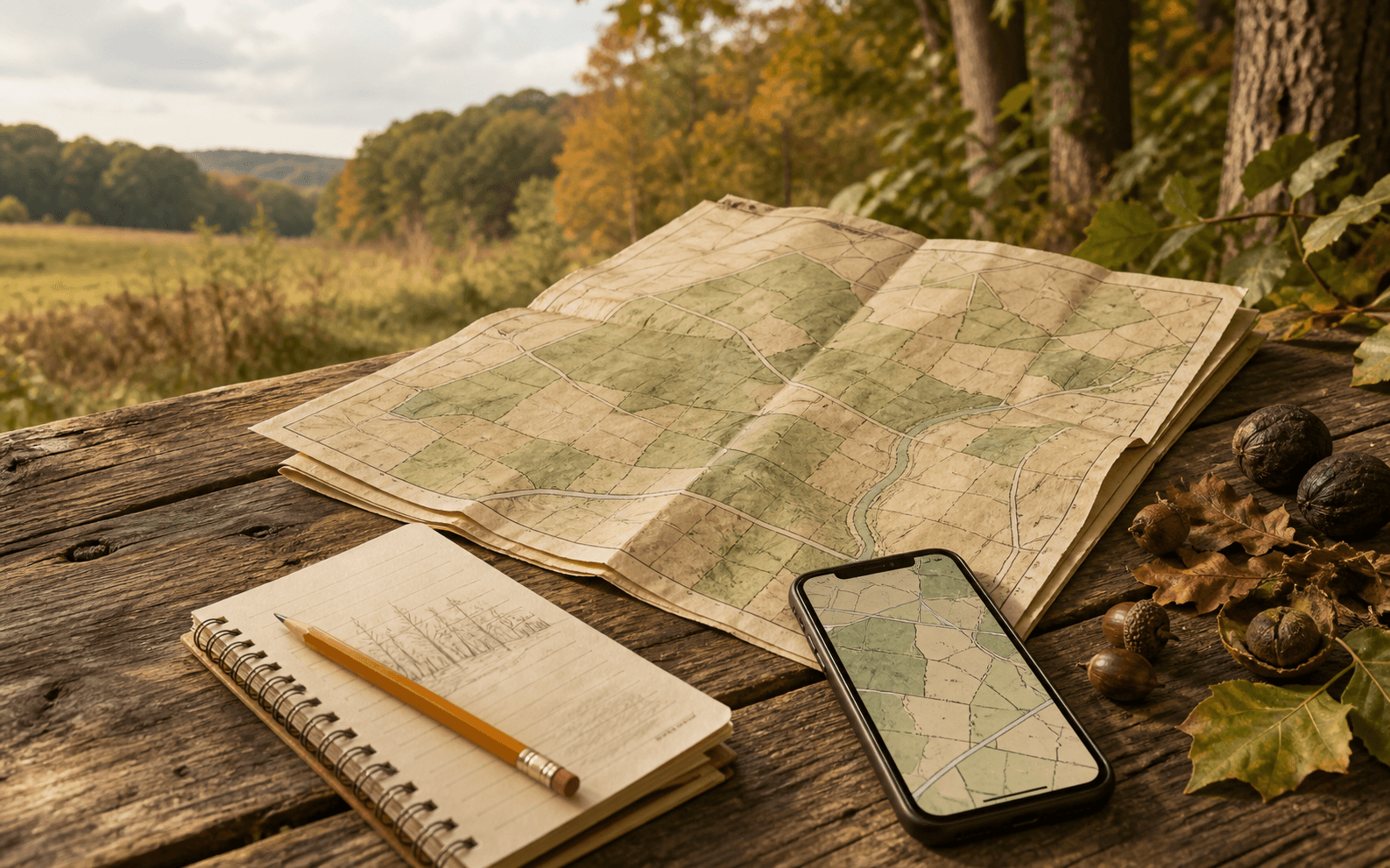
Maps are not permission
You found the tree. Now you need to figure out who owns it.
Public records and mapping tools can help you identify a parcel, a property owner, or the agency responsible for a piece of land. They do not give you permission to enter the property or collect anything.
Use these resources to find the right person or office to ask. Then ask before you collect.
Start with the county
For private property in Pennsylvania, the county government is often the best first stop. County parcel maps and assessment records may show an owner name, parcel number, acreage, mailing address, and approximate parcel boundaries.
Search the county website for parcel viewer, property search, assessment, tax records, or recorder of deeds. If you are not sure where to start, the Pennsylvania county website directory is useful.
Helpful parcel and map tools
A parcel app can be helpful when you know where a tree is but do not know the address or the property boundary.
Treat these tools as a starting point. Parcel data can be incomplete, outdated, or approximate, so confirm important details through the county when needed.
If it is public land, check the agency
Sometimes a promising tree is not on private property at all. It may be on state forest land, state park land, State Game Lands, municipal land, land trust property, or another managed property.
Public land does not automatically mean collecting is allowed. Identify the agency or organization responsible for the property and check current rules before removing seeds, fruit, nuts, berries, or other natural materials.
Other useful local resources
If basic parcel information is not enough, county assessment offices and recorder of deeds offices can help clarify ownership. Land trusts, conservation districts, and extension offices can also help you understand who manages land or who works with landowners in a county.
These are research and contact resources, not shortcuts around permission.
Neighbors may know
Do not overlook the simple option. If a large oak sits beside an empty lot, a neighbor may know who owns it.
Be clear about why you are asking. You are not trying to sneak onto the property. You are trying to find the owner because you want permission.
- Neighbor ask
- I am sorry to bother you. I am trying to figure out who owns the property next door. There is a tree there I am interested in collecting some seed from, and I would like to ask the owner's permission. Do you happen to know who I should contact?
A simple workflow
Do not make landowner research more complicated than it needs to be. Move from observation to ownership research to permission.
- Record the plant and location in BCN Plant Scout.
- Use satellite imagery to understand the site.
- Check county parcel or assessment resources.
- Confirm the owner if the first result is unclear.
- Check whether the land is public or managed by an agency or conservation organization.
- Ask permission before entering or collecting.
- If permission is granted, follow the landowner's conditions and collect responsibly.
The map only gets you to the ask
A parcel map can help tell you who owns the land. It cannot give you permission to collect from it.
Find the owner. Tell them what you are doing. Ask politely. If they say no, thank them for their time. If they say yes, respect their property, follow their conditions, and leave the place better than you found it.
Start scouting
Create useful field records while you are outside.
Open BCN Plant Scout before your next woods walk and save the plants, seed crops, and habitat observations you want to revisit.